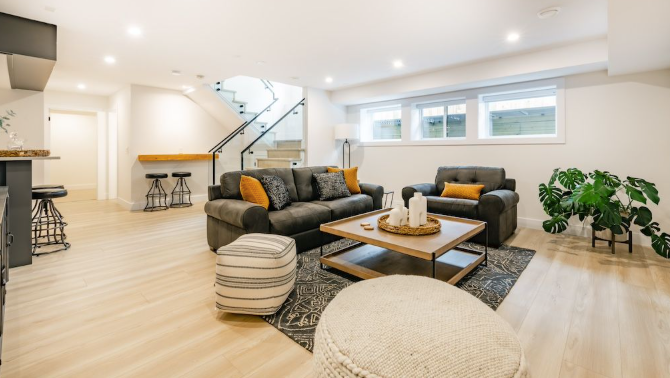
Basements offer added living space without expanding the footprint. Priorities include moisture control, insulation, and safe drainage. Practical design uses flexible zones, built-in storage, and removable partitions to preserve sightlines. Multi-functional furniture and wall-integrated solutions maximize usability. Layered lighting and soundproofing enhance comfort, while clear pathways and stairwell access maintain safety. The right combination can transform a basement, but each choice affects durability and comfort in subtle, enduring ways. What balanced options will suit a given space?
Why Basements Make Great Extra Living Space
Basements offer several practical advantages as extra living space. They provide additional square footage without expanding the home’s footprint, typically at a lower cost per square foot. Basements can host offices, media rooms, or guest areas while preserving above-ground aesthetics. Basement lighting enhances ambiance and usability, while stairway safety remains essential for clear, accessible movement between levels. Freedom-inspired layouts prioritize efficiency and flexibility.
Dry, Cozy Essentials: Moisture Control and Insulation
Moisture control and insulation form the foundation of a dry, comfortable basement living space. Effective moisture management minimizes mold risk and keeps surfaces dry.
Insulation strategies prioritize thermal comfort and energy efficiency without sacrificing access for maintenance. Implement sealants at joints, vapor barriers where needed, and reliable drainage. A disciplined approach yields a stable, breathable space and lasting freedom from dampness.
Design Solutions That Maximize Square Footage
Efficient use of space in a basement hinges on clear zoning, flexible layouts, and built-in solutions that reduce dead areas. Design solutions that maximize square footage prioritize multi-use furniture, wall-integrated storage, and vertical stacking.
Favor compact storage options and ceiling height optimization to keep sightlines open. Choose removable partitions over fixed walls to preserve flexibility and maintain a sense of freedom.
Functional Zones and Finishing Touches for Comfort
Functional zones and finishing touches should be planned to create distinct, comfortable micro-environments within the basement. Practical layouts separate living, work, and recreation areas without clutter. Soundproofing strategies minimize noise transfer, while lighting layering provides depth: ambient, task, and accent lighting. Use durable finishes and smart storage to maintain flexibility, ensuring freedom to reconfigure spaces as needs evolve.
Frequently Asked Questions
What Are Budget-Friendly Basement Conversion Timelines?
A budget-friendly basement conversion timeline varies, typically several weeks to a few months, depending on scope. Budget-conscious projects prioritize permitting, egress safety, and phased work to meet simple milestones within sensible basement timelines.
See also: Cybersecurity Strategies for Small Businesses
How Do I Handle Egress and Safety Codes?
A doorway becomes a lifeline: compliance matters. The plan ensures basement egress and safety codes are met, guiding exits, window wells, and touching on permits. The audience embraces freedom while adhering to essential basement egress safety codes.
Can I Add a Bedroom Without Major Plumbing?
Yes, a bedroom is possible without major plumbing; consider a non-vented bathroom or dry powder room if needed. Focus on bedroom layout optimizing egress and storage, while noting plumbing considerations, drainage, and venting requirements for future flexibility.
What Financing Options Exist for Basement Upgrades?
Financing options vary, including home equity loans, HELOCs, personal loans, and contractor financing; basement upgrade grants may be available for energy-efficient or accessibility projects. These options empower homeowners pursuing practical, freedom-focused improvements with manageable repayment terms.
Which Basement Materials Resist Mold Best?
Basement moisture control and mold-resistant materials are essential; the best options include cement-board, fiber-cement siding, treated lumber, and mold-resistant drywall. Prioritize proper vapor barriers, drainage, and air sealing to maintain a free, practical living space.
Conclusion
Basements make excellent extra living space when moisture, insulation, and safety are prioritized. By creating flexible zones, built-in storage, and removable partitions, homeowners gain sightlines and adaptability without expanding the footprint. Multi-functional furniture and wall-integrated solutions maximize usable area, while layered lighting and soundproofing enhance comfort. Anticipating a common concern—cost—this approach emphasizes scalable, modular upgrades that can be completed in stages. With reliable drainage and clear pathways, durable, comfortable spaces evolve as needs change.