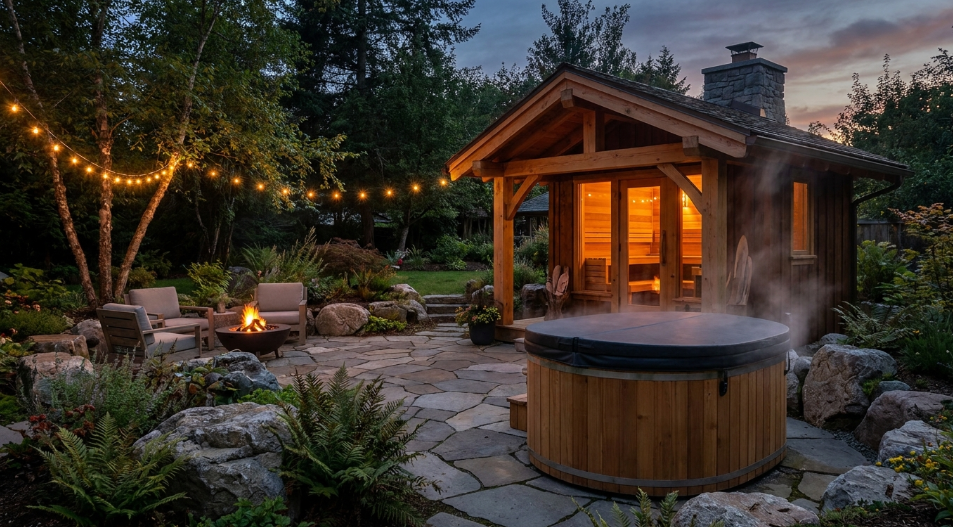
Winter is when a home sauna gets used the most and bought the smartest. Cold air makes a hot cabin feel dramatically better than it does in July, order books at most sellers thin out between the holidays and early spring so buyers get more attention and shorter lead times, and a properly insulated cabin holds a steady 170 to 190 degrees Fahrenheit no matter how cold it is outside. Ordering before the ground freezes also means site prep, electrical work, and delivery are done before the stretch of the year people actually want to use it.
How Does Sauna Use Change Once the Weather Turns Cold?
Usage patterns shift noticeably. In summer, a sauna competes with yard work, travel, long daylight hours, and a body that already feels warm most of the day. Once evenings turn cold and dark early, a heated cabin becomes one of the few genuinely appealing ways to spend a half hour outside, and owners who track their own habits usually notice sessions climb from once or twice a week in warm months to three or four times a week once the weather turns. The draw is not just the heat itself. Coming inside afterward to a warm house, in wool socks, with the cold already sweated out, is a different kind of evening than a July session followed by walking straight back into humid outdoor air.
Why Do Sauna Buyers Find Better Deals in the Off-Season?
Demand for outdoor living products, sauna included, tends to build through spring and peak in early summer, which means installers, electricians, and shipping carriers are booked further out during exactly the season most people start shopping. Ordering in late fall or winter instead means working with sellers whose order books are calmer, which in practice tends to mean faster answers to sizing questions, more flexible delivery windows, and occasionally a seasonal discount on floor models or previous-year builds that a busier spring sales period would not need to offer. None of that is guaranteed on any individual purchase, but the general pattern of softer winter demand holds across most home-improvement categories, sauna cabins included.
How Much Extra Does Winter Add to the Electric Bill?
Cold ambient air increases heat loss through cabin walls, glass, and the door, so a heater cycles more often to hold temperature than it would in a 70 degree backyard. For a typical 6-kilowatt heater used for three or four 30-minute sessions a week, the realistic winter premium on a power bill is modest, often somewhere in the range of a few dollars to around fifteen dollars a month depending on climate and how well the cabin is sealed. A poorly insulated or badly sealed unit pays a much bigger winter penalty than a well-built one, which is one more reason panel quality and door seal design matter more than they might seem to on a showroom floor in June.
What Heater Size Makes Sense for Cold-Climate Winter Use?
Heater sizing is based on cubic footage, not floor space, and cold-climate buyers should size toward the higher end of a manufacturer’s recommended range rather than the minimum. A cabin that just barely reaches temperature on a mild fall evening will likely fall short once outdoor temperatures drop into the teens or lower. A commonly cited starting point is roughly one kilowatt per 45 to 60 cubic feet for a tight, well-insulated cedar cabin, adjusted upward for extra glass, a taller ceiling, or an exposed, wind-prone install location. A heater that is undersized for winter conditions runs constantly and still underperforms, which shortens its working life while delivering a worse session.
What Does the Evidence Say About Regular Sauna Habits?
Research on sauna use and health comes mostly from large Finnish cohort studies, where sauna bathing is a year-round habit rather than a seasonal one. A 2023 review in Mayo Clinic Proceedings looked at whether combining regular sauna bathing with other lifestyle factors, like physical activity and diet, was associated with additional health benefits beyond sauna use on its own, and found the strongest associations in people who kept sauna bathing as a consistent, frequent habit rather than an occasional one. A broader 2018 review, also in Mayo Clinic Proceedings, summarized cardiovascular and general wellness associations reported across multiple studies. Separate physiology research on heat and cold exposure notes that the body’s response to heat stress is fairly consistent regardless of outdoor season, which supports the idea that a winter session delivers the same physiological experience as a summer one, even though it feels more dramatic because of the contrast with the cold. These are population-level associations, not proof that sauna use prevents any specific outcome in any one person.
What Should You Check Before Ordering for Winter Delivery?
Confirm the site is graded and any pad or foundation work is scheduled before the ground freezes in your area, since pouring or leveling a base gets considerably harder once frost sets in. Ask about realistic delivery timing, since carriers can slow down around the holidays even while overall demand is lower. If an outdoor unit needs a water line for a rinse station or exterior faucet, make sure that line can be drained or is rated for freezing temperatures before winter fully arrives. And before ordering, it is worth comparing cabin dimensions, heater wattage, and warranty terms side by side rather than going on price alone; buyers who take that extra step, whether by visiting a showroom or checking specs at a dedicated sauna retailer, tend to end up with a heater properly matched to their climate instead of an underpowered unit that struggles the first time it really gets cold.
Frequently Asked Questions
Does a home sauna use more electricity in winter? Yes, usually somewhat more, since the heater works harder against cold ambient air. For most households the difference is a few dollars a month, not a dramatic jump.
Is it safe to go from a hot sauna into cold winter air? For most healthy adults, brief cold exposure after a hot session is well tolerated. Anyone with an unstable heart condition, a recent cardiac event, or who is pregnant should get input from their own doctor first.
What temperature should a home sauna reach in cold weather? A traditional cabin should still reach 170 to 190 degrees Fahrenheit in freezing conditions if insulation and heater sizing are correct. Struggling to hold that range signals an undersized heater or a leaky cabin.
Is it worth buying a sauna if I will use it less in summer? Most owners report the opposite: use climbs in colder months and tapers in peak summer heat, so a sauna bought for winter typically gets more overall use across the year than expected.
References
- Cardiovascular and Other Health Benefits of Sauna Bathing: A Review of the Evidence, Mayo Clinic Proceedings, 2018
- Does the Combination of Finnish Sauna Bathing and Other Lifestyle Factors Confer Additional Health Benefits? A Review of the Evidence, Mayo Clinic Proceedings, 2023
- Effects of heat and cold on health, with special reference to Finnish sauna bathing, American Journal of Physiology, 2018